- English
- Español
- Português
- русский
- Français
- 日本語
- Deutsch
- tiếng Việt
- Italiano
- Nederlands
- ภาษาไทย
- Polski
- 한국어
- Svenska
- magyar
- Malay
- বাংলা ভাষার
- Dansk
- Suomi
- हिन्दी
- Pilipino
- Türkçe
- Gaeilge
- العربية
- Indonesia
- Norsk
- تمل
- český
- ελληνικά
- український
- Javanese
- فارسی
- தமிழ்
- తెలుగు
- नेपाली
- Burmese
- български
- ລາວ
- Latine
- Қазақша
- Euskal
- Azərbaycan
- Slovenský jazyk
- Македонски
- Lietuvos
- Eesti Keel
- Română
- Slovenski

How Can an ESD Slipper Protect Your Products, People, and Process?
Article Summary
If you’ve ever chased mysterious defects, unexpected device failures, annoying micro-shocks, or “everything looks fine but yield dropped” headaches, static electricity may be the silent culprit. This guide breaks down what an ESD Slipper actually does, where it fits in an ESD control program, and how to choose a pair that’s comfortable enough for long shifts while still delivering stable electrical performance. You’ll get a quick checklist, a comparison table, practical maintenance tips, and an FAQ that answers the questions buyers and safety teams ask most.
Table of Contents
- Customer pain points this solves
- What an ESD Slipper is and how it works
- Where it makes the biggest difference
- How to choose the right ESD Slipper
- Comparison table and selection checklist
- Wear, test, clean, replace
- Common buying mistakes
- FAQ
Outline (At a glance)
- Name the exact problems you’re trying to stop (defects, shocks, audit gaps, comfort complaints).
- Match footwear type to your environment (cleanroom, assembly, warehouse, lab).
- Prioritize stable grounding + fit + durability, then confirm with routine testing.
- Maintain performance with correct wear method, cleaning, and replacement cadence.
Customer pain points this solves
Most buyers don’t start their day thinking, “I’d love to buy footwear.” They start with a problem: quality drift, unexplained failures, uncomfortable PPE that staff hates, or a compliance audit that’s suddenly next week. A well-chosen ESD Slipper targets the real-world pain points that keep recurring in electronics, precision assembly, and controlled environments.
- Mysterious defects: Static discharge can damage sensitive components instantly or weaken them so they fail later, turning “fine at shipping” into “returns and reputational pain.”
- Micro-shocks and discomfort: Even if it’s not dangerous, a shock is distracting and erodes confidence in your safety controls.
- Inconsistent grounding: Footwear that looks correct but performs inconsistently creates gaps you only discover after yield drops.
- Employee resistance: If it’s hot, stiff, slippery, or painful, people “forget” to wear it correctly—then the whole program becomes theater.
- Audit anxiety: A footwear solution that can be tested and documented makes audits less dramatic and more routine.
Quick reality check
An ESD Slipper is not a magic charm. It’s one piece of a system. It works best with an ESD floor (or conductive/dissipative surface), proper training, and routine testing. When those parts line up, the results are boring—in the best way.
What an ESD Slipper is and how it works
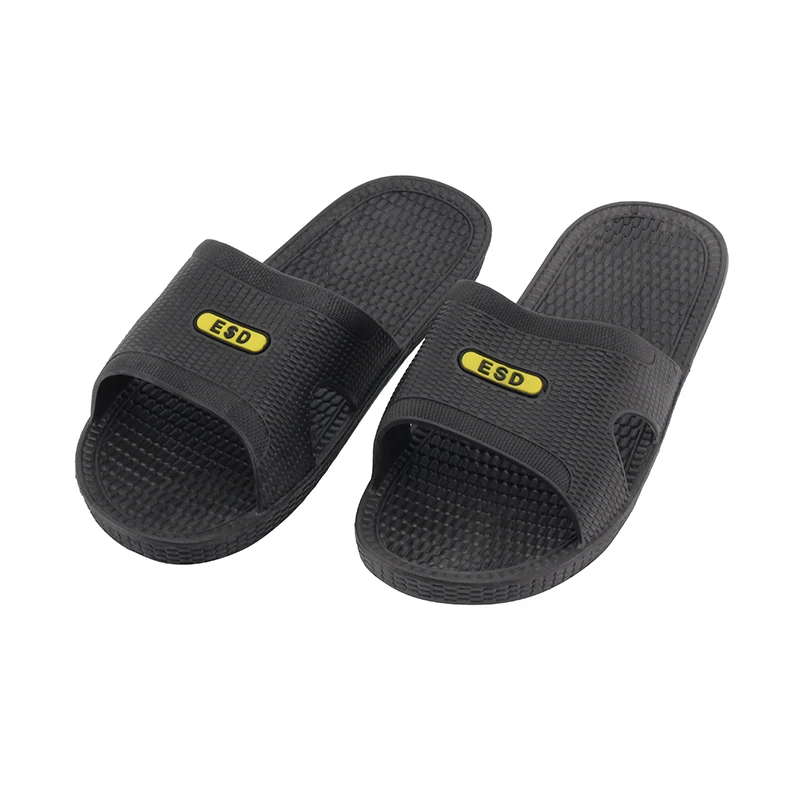
An ESD Slipper is designed to help control static electricity by providing a controlled path for charge to dissipate from the body to the ground. Unlike ordinary slippers that act as insulation, ESD footwear uses specialized materials and construction so static charge doesn’t build up to damaging levels.
- Controlled resistance: ESD footwear is typically engineered to be conductive or dissipative (not fully insulating), so charge can move safely and predictably.
- Contact matters: The slipper must make effective contact with the user (often via the insole/lining) and the floor (via the outsole). Bad fit or incorrect wearing method can break the circuit.
- Environment matters: Humidity, floor type, contamination (dust/oil), and wear conditions all influence real performance.
If your process handles sensitive components, the goal isn’t “zero static ever.” The goal is “no uncontrolled discharge events.” The right ESD Slipper helps keep the charge level low and stable so you don’t get those sudden, product-killing sparks.
Where it makes the biggest difference
You’ll get the most value from ESD Slipper footwear anywhere people move between stations, handle exposed electronics, or work in environments where full ESD shoes feel like overkill. Common fit-for-purpose scenarios include:
- Electronics assembly lines: Especially where staff stands or walks on ESD floors for long shifts.
- Cleanrooms and controlled zones: Where you want easy on/off transitions and low particle shedding (depending on material choice).
- Laboratories and test areas: Where sensitive measurements or prototypes are handled.
- ESD visitor control: When visitors enter an ESD-protected area and need quick compliance without issuing permanent footwear.
If you recognize this, you likely need an upgrade
- Operators complain about shocks near certain stations or during dry seasons.
- Footwear compliance is “officially” high but testing results are inconsistent.
- You see intermittent failures that don’t reproduce easily in the lab.
- Your team is swapping regular slippers or sandals inside the workshop (comfort wins, control loses).
How to choose the right ESD Slipper
Buying the wrong ESD Slipper usually happens when a team focuses on a single checkbox—“It’s ESD, done”—and ignores comfort, wear method, or environment. Here’s a practical way to choose without overthinking it.
-
Start with your floor and your workflow.
ESD footwear performs as a system with the floor. Confirm whether you have ESD flooring, ESD mats, or mixed surfaces (tile + epoxy + ramps). If staff frequently walks off an ESD floor onto insulating surfaces, performance can swing. -
Choose a closure and fit that people will actually use.
Loose slippers that flop around are a compliance nightmare. Look for options with heel straps or secure uppers when long shifts are involved. -
Prioritize stable contact points.
The insole/lining should maintain contact with the user’s foot or sock reliably. If the design relies on a specific wearing method, training must be explicit. -
Match materials to your environment.
Cleanrooms may prioritize easy cleaning and low lint. Workshops may prioritize abrasion resistance and anti-slip patterns. The “best” material depends on where it lives. -
Plan for testing and documentation from day one.
If you already use a footwear tester, confirm the slipper can be tested consistently and that your team will test on a schedule. If you don’t test today, budget for it—otherwise you’re guessing.
A note on resistance targets
Facilities often specify footwear-to-floor resistance ranges based on their internal ESD control requirements and applicable standards. If you’re sourcing an ESD Slipper for a regulated or audited environment, align with your ESD coordinator or quality team before locking specs.
Comparison table and selection checklist
Use the table below to compare common footwear approaches. It’s not about “best overall”—it’s about the lowest-risk match for your shop floor.
| Option | Strengths | Watch-outs | Best for |
|---|---|---|---|
| ESD Slipper | Easy on/off, comfort-friendly, good for indoor stations and visitor use | Fit and wear method matter; must pair with compatible flooring and testing | Assembly, labs, controlled zones, quick compliance |
| ESD shoes | More robust protection and durability, stable fit for long walking | Higher cost, less convenient for short visits or frequent changing | High-traffic production areas, warehouses with ESD floors |
| ESD heel grounder / strap | Quick to deploy, low cost, works with existing footwear | Often worn incorrectly; performance depends heavily on correct contact | Visitors, temporary workers, low-duty applications |
| Wrist strap (seated work) | Very effective for bench work when used correctly | Not suitable for walking tasks; requires discipline and connection points | Repair benches, test stations, delicate handling at fixed work areas |
Selection checklist you can forward to procurement
- Confirm intended area: cleanroom, assembly, lab, or mixed-use.
- Define fit requirements: sizes, adjustable strap, wide/regular options.
- Confirm outsole needs: anti-slip pattern, abrasion resistance, non-marking.
- Align on electrical performance expectations with your ESD coordinator.
- Plan testing frequency and record-keeping (daily/weekly/monthly as applicable).
- Set cleaning method and replacement criteria before rollout.
Wear, test, clean, replace
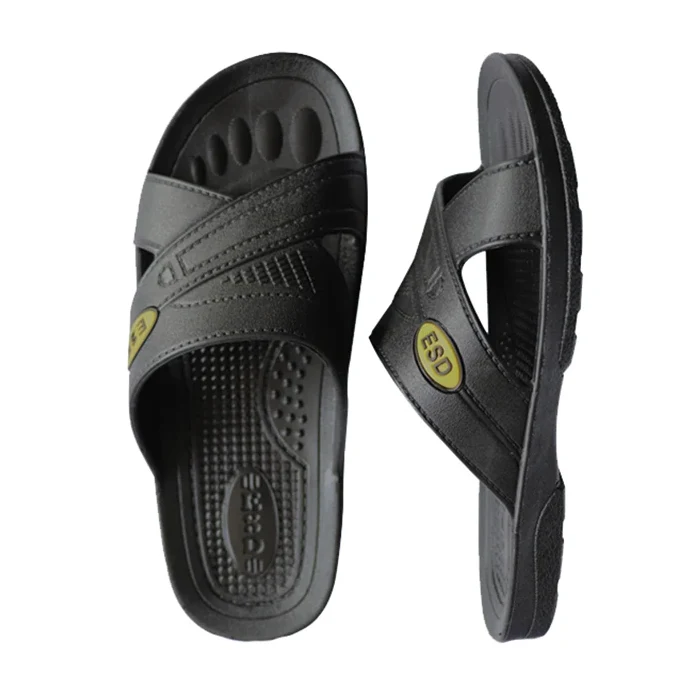
The most expensive ESD Slipper in the world can fail if it’s worn casually like a beach slipper. Performance is a habit. Here’s how teams keep results consistent without turning it into a daily argument.
Wearing tips
- Wear them the intended way every time (especially if a strap is designed to secure fit).
- Avoid thick insulating socks if your program requires direct contact through the insole/lining.
- Keep the outsole clean—dust and debris can affect contact with flooring.
Testing basics
- Use a footwear tester if available, and test at a consistent time (start of shift is common).
- Track pass/fail trends by department; repeated failures usually point to wear method, contamination, or worn-out soles.
- Re-test after cleaning or after moving between different flooring zones if failures occur.
Cleaning and replacement
- Clean using methods compatible with your environment (mild cleaning is common; avoid harsh chemicals unless approved).
- Replace when tread wears down, fit becomes unstable, straps lose elasticity, or testing becomes inconsistent.
- Keep a small buffer stock so replacements don’t turn into “we’ll deal with it later.”
The point isn’t perfection—it’s predictability. When your ESD Slipper performance is predictable, you stop chasing phantom defects and start seeing steadier output.
Common buying mistakes
If you want to avoid re-buying in three months, dodge these classics. They’re the usual reasons a rollout fails even when the product itself is decent.
- Buying only on price: Cheap is expensive when it triggers retesting, re-training, and rework.
- Ignoring comfort: Discomfort creates “creative compliance,” which is just non-compliance wearing a mask.
- Skipping testing: Without routine checks, you don’t have control—you have hope.
- Mismatch with flooring: Footwear and floor must work together; otherwise you get inconsistent results.
- No replacement plan: All footwear wears out. Decide what “end of life” looks like before the first pair is issued.
Where a manufacturer’s support helps
A reliable supplier should help you clarify application scenarios, sizing, material behavior in real use, and what routine testing looks like. Dongguan Xin Lida Anti-Static Products Co., Ltd. focuses on anti-static protective products and can support common use cases such as production areas, controlled zones, and visitor management programs—especially when you need consistent supply and practical rollout guidance.
FAQ
Q: Do I need ESD slippers if I already use wrist straps?
A: Wrist straps are excellent for seated or bench work, but they don’t help when operators walk between stations. If your process includes movement, an ESD Slipper (with compatible flooring) can reduce charge buildup during normal workflow.
Q: Can I use ESD slippers on normal tile or concrete floors?
A: You can, but results may vary because flooring properties matter. The most stable performance usually comes from pairing ESD footwear with a floor designed for controlled dissipation. If your floor isn’t designed for that, consider testing on-site before full deployment.
Q: How often should we test ESD footwear?
A: It depends on your risk level and internal controls. Many facilities test at the start of each shift for high-sensitivity work, while others test on a scheduled basis. The key is consistency and record-keeping—test often enough to catch drift before it turns into defects.
Q: Why do some people fail footwear tests more often than others?
A: Usually because of wear method (loose fit, incorrect strap use), socks/clothing choices that reduce contact, contamination on the outsole, or worn materials. Standardizing how people wear and maintain an ESD Slipper solves many “random” failures.
Q: What’s the simplest way to improve compliance?
A: Make the compliant choice the comfortable choice. Provide correct sizing, secure fit options, and clear “how to wear” visuals at entry points. When the ESD Slipper feels good and is easy to use, compliance stops being a daily battle.
Closing thoughts
Static control isn’t glamorous, but it’s one of the fastest ways to protect yield, reduce rework, and keep teams focused on production instead of troubleshooting. A dependable ESD Slipper, paired with compatible flooring and routine testing, can turn a stubborn, invisible risk into a controlled variable—quietly improving quality day after day.
Ready to choose the right ESD Slipper for your site?
Tell Dongguan Xin Lida Anti-Static Products Co., Ltd. where you’ll use it (cleanroom, assembly, lab, visitor control), your sizing needs, and how your floor is set up—and we’ll recommend a practical configuration that fits your workflow. If you want faster selection and fewer surprises in testing, contact us and let’s match the right option to your environment.