- English
- Español
- Português
- русский
- Français
- 日本語
- Deutsch
- tiếng Việt
- Italiano
- Nederlands
- ภาษาไทย
- Polski
- 한국어
- Svenska
- magyar
- Malay
- বাংলা ভাষার
- Dansk
- Suomi
- हिन्दी
- Pilipino
- Türkçe
- Gaeilge
- العربية
- Indonesia
- Norsk
- تمل
- český
- ελληνικά
- український
- Javanese
- فارسی
- தமிழ்
- తెలుగు
- नेपाली
- Burmese
- български
- ລາວ
- Latine
- Қазақша
- Euskal
- Azərbaycan
- Slovenský jazyk
- Македонски
- Lietuvos
- Eesti Keel
- Română
- Slovenski

Why Are Hospital Clean Rooms Sticky Mats Essential for Infection Control in Healthcare Facilities?
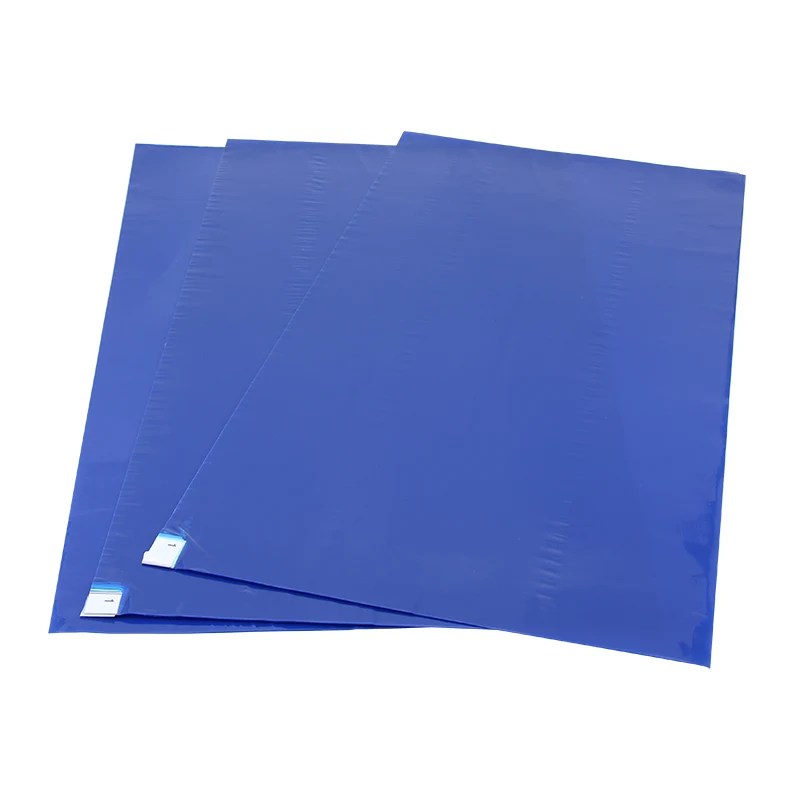
In hospital environments, contamination control is not just a best practice—it's a matter of patient safety. Operating rooms, laboratories, and other sterile areas require rigorous protocols to prevent the spread of dust, bacteria, and other contaminants that can compromise procedures and patient outcomes. One often overlooked but critical component of these protocols is the humble sticky mat at the entrance of clean rooms. Today we examines the Hospital Clean Rooms Sticky Mat from Xinlida, exploring its material composition, adhesive properties, applications, and the manufacturing standards that make it a reliable choice for healthcare facilities worldwide.
The Critical Role of Contamination Control in Healthcare
Hospital-acquired infections remain a significant challenge in healthcare settings worldwide. Patients in operating rooms, intensive care units, and isolation wards are particularly vulnerable to airborne and surface-borne pathogens. While sterilization of instruments, hand hygiene, and protective clothing receive considerable attention, the simple act of walking into a clean room can introduce contaminants that compromise the sterile environment.
Shoes and wheels track dirt, dust, and microorganisms from outside areas into sensitive spaces. Even with protective shoe covers, particles can still be transferred. This is where sticky mats—also known as adhesive mats or tacky mats—play a crucial role. Placed at the entrance of clean rooms, they trap contaminants on their adhesive surface, preventing them from being tracked further into the sterile area.
Xinlida (Dongguan Xin Lida Anti-Static Products Co., Ltd.) has been manufacturing anti-static and clean room consumables since 2010. With a 15,000-square-meter facility in Dongguan and over 120 employees, the company produces a wide range of products including anti-static clothing, dust-free cloth, sticky mats, and sticky rollers. Their Hospital Clean Rooms Sticky Mat is specifically designed for healthcare environments, combining strong adhesive properties, durable construction, and compliance with industry standards. This article provides a detailed look at the product's features, applications, and the manufacturing expertise that makes it a trusted choice for hospitals and clean room facilities.
Technical Specifications
Below is a summary of the key specifications for the Hospital Clean Rooms Sticky Mat from Xinlida.
| Parameter | Details |
| Product Name | Hospital Clean Rooms Sticky Mat |
| Brand | Xinlida |
| Material | Polyethylene (LDPE) with water-based adhesive (environmentally friendly) |
| Available Sizes | 18" × 36" (45 × 90 cm), 24" × 36" (60 × 90 cm), 26" × 45" (66 × 115 cm) |
| Thickness per Sheet | 0.09 mm ± 0.01 mm |
| Number of Layers | 30 layers per pad (standard), 40, 50, 60 layers available |
| Color Options | Sky blue (standard), white, gray, transparent, green, yellow (customizable) |
| Packaging | 30 sheets/pad; 10 pads/carton |
| Key Properties | High adhesion, non-toxic, no adhesive transfer, easy to peel, durable |
| Primary Application | Clean room entrances, operating rooms, laboratories, patient care areas |
| Certifications | ISO 9001, CE |
What Makes a Hospital Clean Room Sticky Mat Different?
Not all sticky mats are created equal. While they may look similar, the materials, adhesive quality, and construction vary significantly between general-purpose mats and those designed for critical environments like hospitals.
High-Adhesive Properties
Hospital clean room sticky mats feature a highly adhesive surface that effectively captures dirt, dust, and microbial contaminants. This ensures that potential pollutants are trapped at the entrance, preventing them from being tracked into the clean room. The adhesive is formulated to be strong enough to capture fine particles, including bacteria and other microorganisms that are invisible to the naked eye.
Durable Construction
These mats are made from durable polyethylene (PE) material that can withstand heavy foot traffic and regular use without losing their adhesive properties. The multiple-layer construction—typically 30 or more layers—allows the mat to remain effective over an extended period. Each layer has a numbered label for easy replacement, reducing the time and effort required for maintenance.
Non-Toxic and Environmentally Friendly
Hospital environments demand materials that do not off-gas or release harmful substances. Xinlida's sticky mats use environmentally friendly, water-based pressure-sensitive adhesive that is non-toxic and odor-free. This is particularly important in healthcare settings where patients may be sensitive to chemicals or have respiratory issues.
No Adhesive Transfer
One common problem with low-quality sticky mats is adhesive transfer—the glue from the mat sticks to shoes or wheels, creating a sticky residue that can attract more dirt. Xinlida's mats are designed to provide strong adhesion without transferring adhesive to footwear or equipment, maintaining cleanliness throughout the facility.
Customizable for Different Needs
Hospitals come in different sizes and configurations, and so do their entrances. Xinlida offers sticky mats in various sizes, layer counts, and colors to meet the specific needs of different clean room entrances. This flexibility ensures that facilities can find a mat that fits their space and traffic patterns.
Applications in Healthcare Settings
The Hospital Clean Rooms Sticky Mat is designed for use in environments where maintaining sterility and cleanliness is critical. Common applications include:
• Operating Rooms (ORs) – Placed at the entrance to prevent dirt and contaminants from entering the sterile field during surgeries. The mat captures particles from shoes and equipment, reducing the risk of surgical site infections.
• Laboratories and Testing Facilities – Used at the entrance of diagnostic and research labs to prevent cross-contamination of samples and ensure accurate test results.
• Intensive Care Units (ICUs) and Patient Care Areas – Helps protect immunocompromised patients from environmental contaminants that could lead to infections.
• Pharmaceutical Compounding Areas – Critical for maintaining the sterility of drugs prepared in clean rooms.
• Clean Room Buffer Zones – Provides an additional layer of contamination control between general areas and sterile zones.
• Biological Safety Laboratories – Used at the entrance of high-containment facilities to prevent the escape of pathogens and protect workers.
• Data Centers and Electronics Manufacturing – While the focus is on healthcare, these mats are also used in industries where particle contamination can damage sensitive components, such as semiconductor manufacturing and aerospace.
Structure and How It Works
Understanding the construction of a sticky mat helps users appreciate its functionality and proper usage.
Layer Structure
A typical hospital clean room sticky mat consists of multiple layers, each serving a specific purpose:
• Top Protective Film (Layer 1) – A transparent, non-adhesive PE film that protects the adhesive surface during storage and shipping. This layer is removed before use.
• Adhesive PE Layers (Layers 2 to 30) – Each layer is an adhesive PE film, typically sky blue, that captures contaminants. Each layer is numbered for easy identification and replacement.
• Double-Sided Adhesive Layer – One side adheres to the floor, while the other side holds the stack of adhesive layers in place.
• Bottom Protective Film – A non-adhesive layer that protects the adhesive on the bottom of the mat during storage.
How to Use
The mat is placed on the floor at the entrance of the clean room. As people walk across it, the adhesive surface captures dirt, dust, and microorganisms. When the top layer becomes saturated with contaminants, it is peeled away to reveal a fresh adhesive layer underneath. This process can be repeated until all layers are used, at which point the mat is replaced.
Layer Numbering
Each layer has a number label (1-30 or 30-1) printed on the corner for easy identification. Some users prefer to number from top to bottom, while others prefer bottom to top—the numbering system can be customized to suit user preference.
The Xinlida Manufacturing Advantage
Choosing a supplier for clean room consumables requires confidence in their production capacity, quality systems, and ability to deliver consistent products. Xinlida has been operating since 2010 and has grown to become a significant player in the anti-static and clean room industry.
Scale and Capacity
The company's 15,000-square-meter facility houses a 10,000-square-meter standard production workshop. Annual production capacity includes 2 million sets of anti-static clothing, 3 million pairs of anti-static shoes, 5 million sticky mats, and 5 million packages of dust-free cloth and paper. This scale ensures that the company can meet the demands of large customers and global markets.
Advanced Production Equipment
Xinlida is equipped with 4 PE film blowing machines, 4 PE coating lines, 10 rewinding machines, 2 PU molding machines, 20 laser cutting machines, 100 various needle sewing machines, 50 computer high sewing machines, and 35 testing instruments. This extensive equipment base allows the company to control quality at every stage of production.
Quality Certifications
The company holds ISO 9001 quality management system certification and CE certification for its products. It has also applied for 8 registered trademarks and obtained 3 new design and invention patents. These certifications and intellectual property protections reflect the company's commitment to quality and innovation.
Global Reach
Xinlida has served more than 6,000 customers across China and exports to 38 countries and regions, including Europe, America, Japan, South Korea, Southeast Asia, and India. Major clients include Foxconn, Huawei, Gree Electric Appliances, BYD, TCL, and Skyworth—demonstrating the company's ability to meet the high standards required by Fortune 500 companies.
Frequently Asked Questions
Q: What materials are used in hospital clean room sticky mats?
A: The mats are made from polyethylene (PE) with water-based pressure-sensitive adhesive. The material is non-toxic, odor-free, and environmentally friendly, making it suitable for hospital environments.
Q: How many layers does a typical mat have?
A: Standard mats have 30 layers. Options with 40, 50, or 60 layers are also available for facilities that require less frequent replacement.
Q: Can the mat be used in non-healthcare settings?
A: Yes. While designed for healthcare environments, these mats are also used in electronics manufacturing, semiconductor fabrication, aerospace, and other industries where particle contamination must be controlled.
Q: How often should the mat be replaced?
A: The top layer should be peeled away when it becomes visibly dirty or saturated with contaminants. The frequency depends on foot traffic—high-traffic areas may require daily layer removal, while low-traffic areas may go several days between removals.
Q: Are there different sizes available?
A: Yes. Standard sizes include 18" × 36", 24" × 36", and 26" × 45". Custom sizes can be manufactured to fit specific entrance dimensions.
Q: What colors are available?
A: Sky blue is the standard color. White, gray, transparent, green, and yellow are also available, and custom colors can be produced to meet specific requirements.
Q: Does Xinlida offer customization for hospital branding?
A: Yes. Xinlida can customize mat sizes, colors, and layer configurations. For bulk orders, customized packaging options are also available.
Conclusion
The Hospital Clean Rooms Sticky Mat from Xinlida is a practical, effective solution for contamination control in healthcare environments. Its strong adhesive properties, durable construction, and non-toxic materials make it suitable for use in operating rooms, laboratories, and other sensitive areas where maintaining sterility is critical. The simple layer-based design allows for easy maintenance and replacement, ensuring that clean room entrances remain effective without significant time or labor investment.
Backed by over a decade of manufacturing experience, ISO 9001 and CE certifications, and a client list that includes Fortune 500 companies, we has established itself as a reliable supplier of clean room consumables. Whether for hospitals, electronics manufacturing, or pharmaceutical facilities, their sticky mats offer dependable contamination control at a competitive price.
For more information, samples, or to discuss customization options, contact us directly. They can provide product specifications, pricing, and delivery timelines tailored to your specific requirements. Reach out through the company website or email to get started.